

Industry news

What are the characteristics of U-shaped glass?
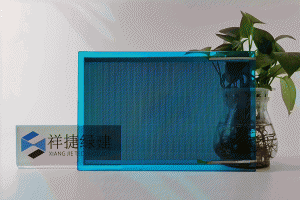
U-shaped glass, also called channel glass, is profiled architectural glass with nearly 40 years of use in China and abroad. It is produced continuously by rolling and then forming, and takes its name from its U-shaped cross-section. Available in many varieties, it offers good light transmission, thermal insulation, and high mechanical strength. It is versatile and easy to install, provides distinctive architectural and decorative effects, and can reduce lightweight metal-framing requirements. It is used in urban and rural buildings around the world.
The main features of U-shaped glass are as follows:
1. Energy saving: U-type glass has low heat transfer coefficient (double-layer U glass k = 2.39 w/M2K, shading coefficient SC = 0.31, light transmittance 81%) , and excellent heat insulation function. Compared with 6mm + 12A + 6mm LOW-e insulating glass (K = 1.66 w/M2K, shading coefficient SC = 0.31, light transmittance 35%) , U-shaped glass has better light transmittance function and is more beneficial to daylighting of gymnasium.
2. Economy: U-shaped glass is a profiled glass made by continuous rolling. Extending architectural glass from flat sheets to profiles helps keep its overall cost relatively low. U-shaped glass curtain walls can also reduce the amount of steel or aluminum framing required.
3. Environmental protection: the high light transmittance of U-shaped glass can reduce indoor lighting costs in office buildings and other public buildings while creating a more comfortable working environment. U-shaped glass can also be produced from recycled broken and waste glass, helping to protect the environment.
4. Simple, convenient installation: U-shaped glass can serve directly as a load-resisting component within the curtain wall. Compared with conventional glass curtain walls, this reduces the need for framing and other accessories, simplifies fabrication and installation, shortens construction time, and lowers costs.
It can reduce the amount of metal framing required and is simple to install. Applications include exterior and interior walls, partitions, roofs, and windows.