

Company news

How to make colored U-shaped glass more colorful
How to make colored U-shaped glass more colorful
Colored U-shaped glass, an increasingly popular building material, is bringing fresh color to architectural projects as summer temperatures rise.
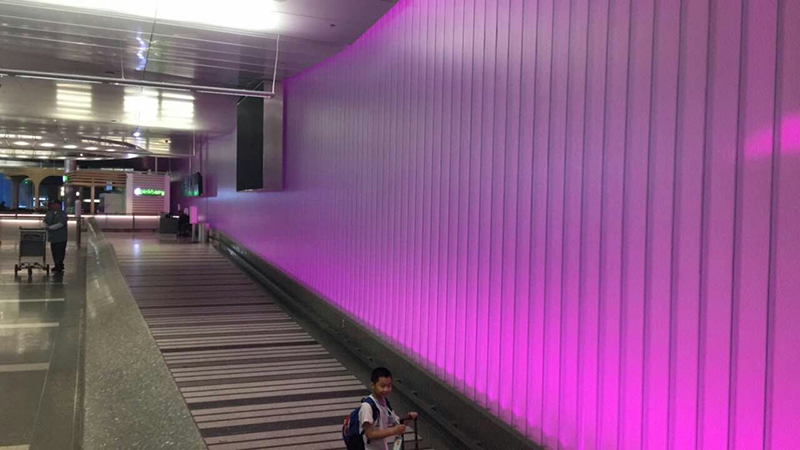
Glass comes in many colors as well as the familiar colorless, transparent form. Examples include the purplish-black glass used in car windows and blue architectural glass. Traffic signals use red, yellow, and green glass lenses. During festivals, colored glass light bulbs are also widely used for decorative lighting.
To meet customers’ overall color-design requirements, Xiangjie’s U-shaped glass R&D team has developed a range of body-tinted U-shaped glass through repeated testing. These products suit varied color schemes and have been used in projects across China.
Colored U-shaped glass can be customized in texture, panel width, flange height, and thickness. Secondary treatments include sandblasting, fine frosting, frosting, ceramic enamel, fire protection, and explosion protection.
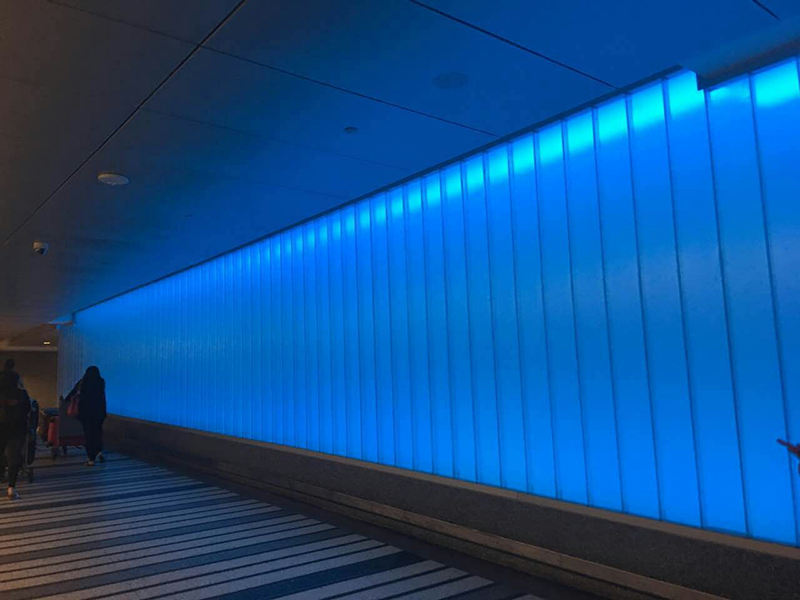
The main component of U-shaped glass is quartz sand. Its manufacturing process is crystal formed by cooling quartz sand with other chemical materials after firing at high temperature (1300 ℃), which has the characteristics of hard quality, wear resistance, high light transmittance and corrosion resistance. Its wide application has a long history.
Ordinary U-shaped glass appears clear from the front but slightly blue-green when viewed from the side near the edge. Glass color depends on the purity and iron content of quartz sand, its main raw material. Small amounts of manganese dioxide or selenium are added to produce colorless U-shaped glass. Some dark U-shaped glass is used for decorative purposes where requirements are less demanding, and we produce it only occasionally. Today’s colored U-shaped glass designs have more demanding technical requirements, making an understanding of glass coloration essential.
Colored U-shaped glass is body-tinted using an integral coloring process. Available colors include light blue, diamond blue, sea blue, brown, green, and gray-black.
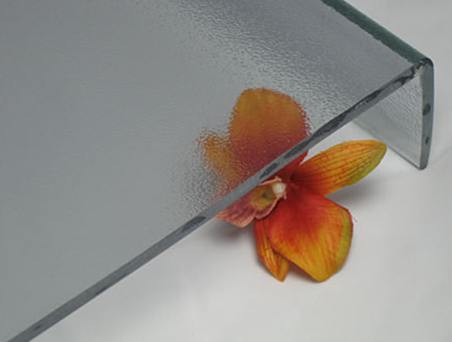
(light blue U-glass)
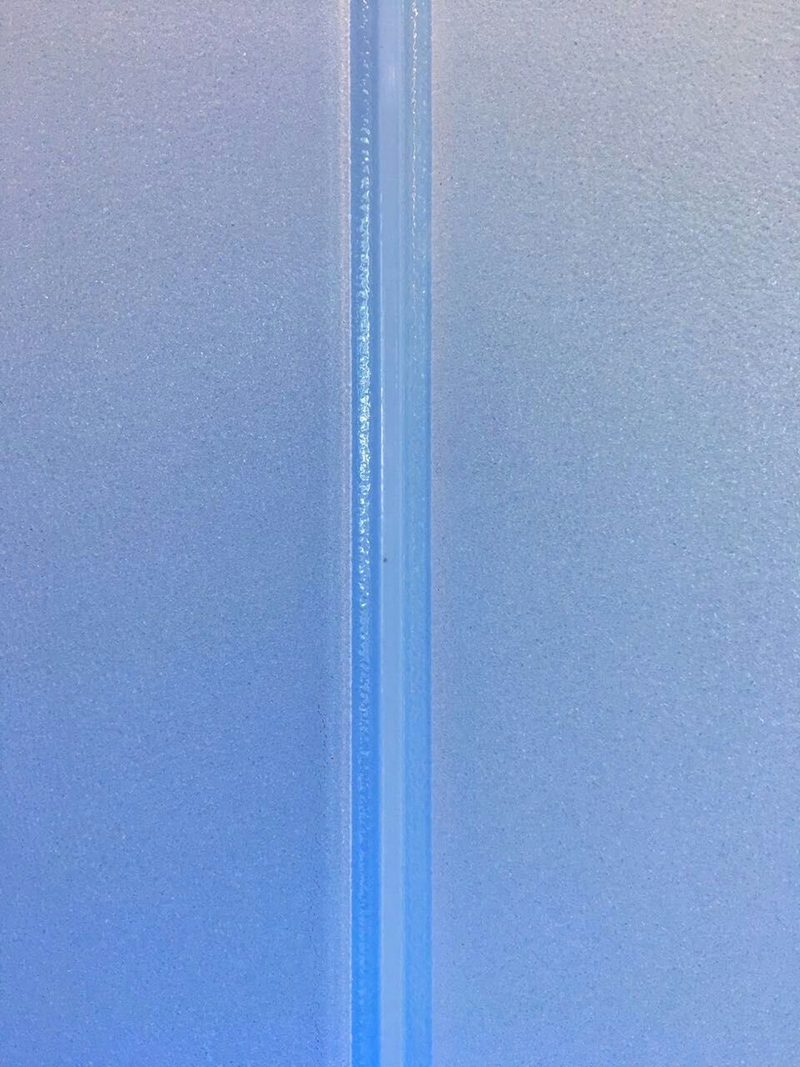
(Sea-blue U-shaped glass)
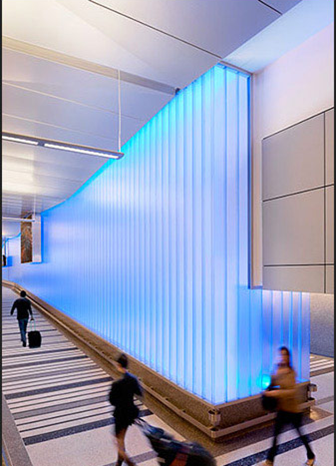
(Completed installation in sea blue)
Research shows that adding 0.4-0.7% colorant to an ordinary glass batch can give U-shaped glass its color. Most colorants are metal oxides. Each metal element has characteristic spectral properties, so different metal oxides produce different colors when added to the glass batch.
For example, copper(II) oxide or chromium(III) oxide produces green; cobalt(II) oxide produces blue; manganese dioxide produces purple; tin dioxide or calcium fluoride produces milky white; uranium compounds produce yellow-green fluorescence; colloidal selenium produces ruby red; colloidal gold produces red, reddish purple, or blue; cuprous oxide produces red, green, or blue; ferrous compounds produce green, or black in larger quantities; and iron(III) compounds produce yellow.

(Blue U-shaped glass)
The color of U-shaped glass depends not only on the colorant added, but also on the melting temperature and furnace atmosphere, which influence the oxidation state of the elements. For example, copper in a higher oxidation state produces blue-green glass, while cuprous oxide (Cu2O), with copper in a lower oxidation state, produces red glass. Sometimes a second heating is needed to develop the color. Gold-ruby glass is made by adding a small amount of gold to the ordinary glass batch. After the first melting, the gold is dispersed as atoms and the glass remains colorless. Reheating close to the softening temperature allows the atoms to form colloidal particles, giving the glass a rich red color.
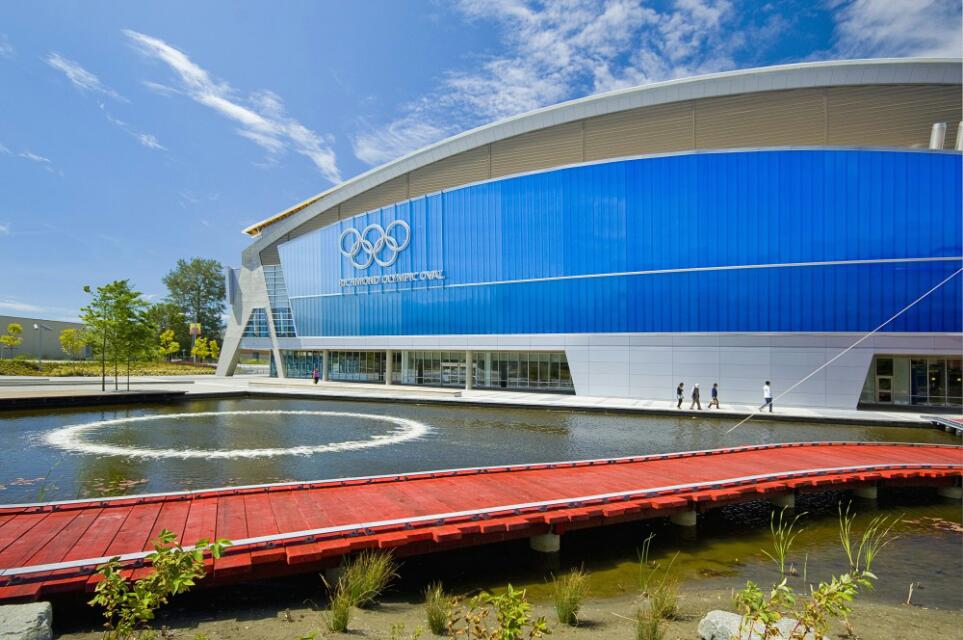
Richmond Olympic Oval speed-skating venue, 2010 Winter Olympics (blue U-shaped glass)
Rare-earth oxides are used as colorants to produce specialty colored glass. Such glass has clear, bright colors and may change color under different lighting. In addition to rare-earth elements, tungsten and platinum can be added directly to the glass to produce color-changing effects.
Colored U-shaped glass makes your architectural works more effective.